What are the Classical Liberal Arts?
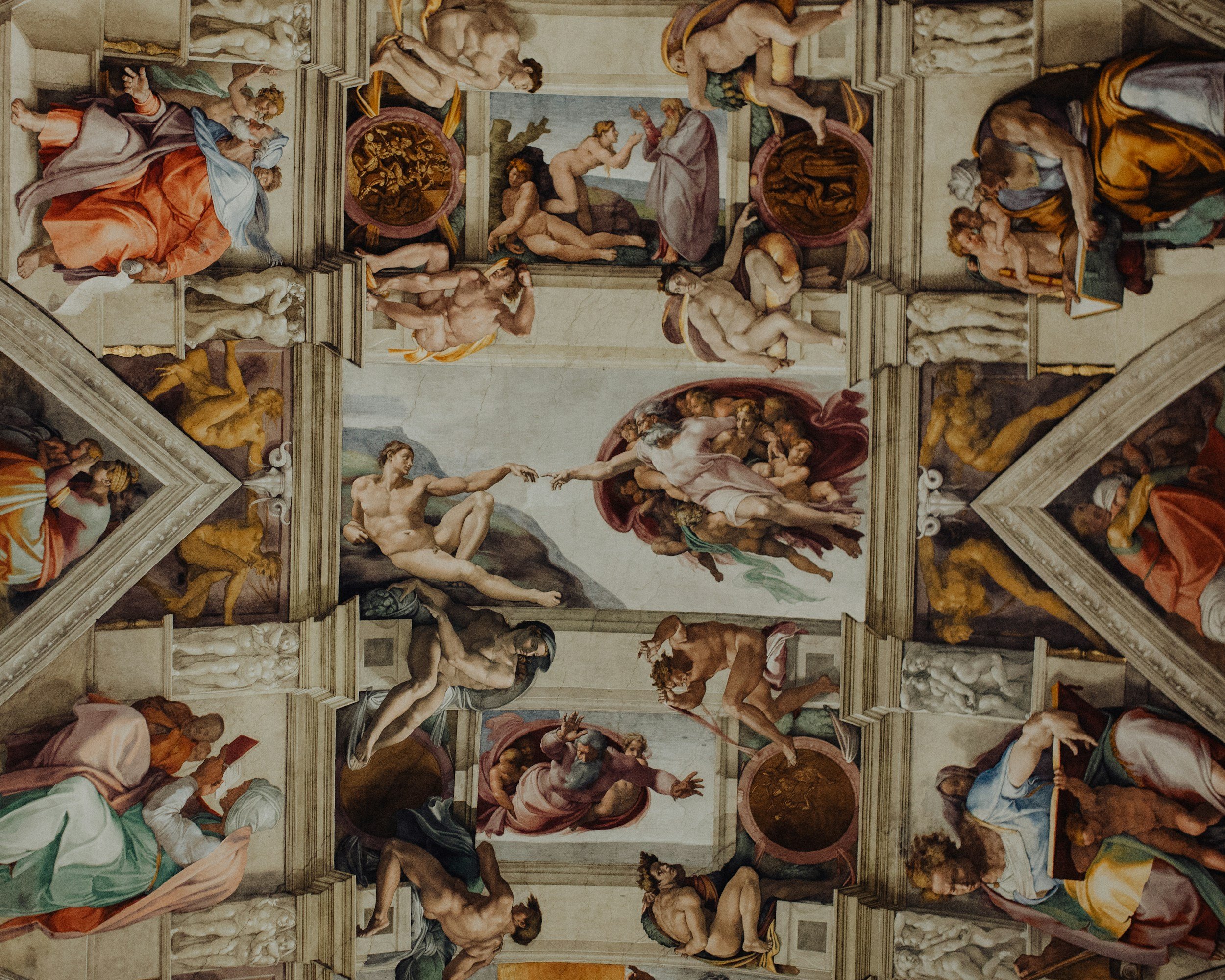
Drawing on the rich tradition of Catholic education handed down through the centuries, we stand on the shoulders of saints and scholars who point us toward Truth, Goodness, Beauty, Wisdom, and Virtue. At Nazareth Catholic Academy, classical liberal arts education is not simply a particular curriculum or a collection of old books. It is an understanding of what education is for.
We believe that every child is created in the image and likeness of God, endowed with an intellect made to know truth, a will made to choose the good, and a soul made for communion with God. Education, therefore, should do more than prepare a child for the next grade, college, or a future career. It should cultivate the whole person and help the child grow in wisdom, virtue, freedom, and holiness.
Our ultimate aim is not simply to produce knowledgeable students. It is to form free and faithful men and women who know what is true, love what is good, recognize what is beautiful, and possess the wisdom and virtue to live accordingly.
⸻
Why “Classical”?
Classical education receives rather than reinvents.
It recognizes that we are heirs to a remarkable intellectual and spiritual inheritance. Across generations, men and women have wrestled with the great questions of human existence:
Who is God? Who is man? What is true? What is good? What is justice? What makes a life worth living? What are we made for?
Our students enter that great conversation through Sacred Scripture, the lives and writings of the saints, literature, history, poetry, mathematics, science, music, art, philosophy, theology, and the great works and ideas that have shaped Christian civilization.
“Classical” does not mean retreating into the past or rejecting the modern world. It means giving students roots deep enough to understand the present, judge it wisely, and help shape the future. We do not want children to know only what is fashionable in their own moment. We want them to encounter what is enduringly true.
⸻
Why “Liberal”?
The word liberal comes from the Latin liber, meaning free.
The liberal arts were traditionally understood as the education that grants freedom. But Christian freedom is more than having unlimited choices. True freedom is the ability to know and choose what is good. (John 8:32)
A child who cannot reason clearly can be manipulated.
A child who cannot govern his desires is not truly free.
A child who has never encountered what is beautiful may settle for what is merely entertaining.
A child who does not know the truth about God and the human person cannot fully understand who he is or what he is made for.
The liberal arts therefore seek to develop the habits of mind and character necessary for genuine freedom: attention, memory, imagination, reason, judgment, eloquence, self-discipline, and virtue.
We educate for freedom, and ultimately for freedom in Christ.
⸻
Why “Arts”?
The classical liberal arts are not merely subjects to be mastered. They are arts, meaning habits and intellectual tools that enable a person to learn, reason, communicate, and pursue wisdom.
Traditionally, these include the arts of the Trivium:
Grammar
Learning the structure of language and acquiring the knowledge necessary to understand the world.
Logic
Learning to reason carefully, distinguish truth from error, ask good questions, and follow an argument wherever the truth leads.
Rhetoric
Learning to communicate what is true with clarity, beauty, persuasion, and charity.
The classical tradition also recognizes the importance of mathematical and scientific reasoning through arithmetic, geometry, music, and astronomy, historically known as the Quadrivium.
These arts are not isolated academic exercises. They train the mind to perceive order, relationship, proportion, harmony, cause, and meaning.
They give students the tools necessary to continue learning for the rest of their lives.
⸻
A Catholic Vision of Knowledge
At Nazareth, classical education is not simply classical. It is Catholic.
The Catholic intellectual tradition begins from the conviction that God is the Creator of all things and therefore all truth is ultimately one. There is not one truth in theology and another truth in science. There is not a Catholic world and a separate “real world.”
History, literature, mathematics, science, art, music, philosophy, and theology illuminate different dimensions of the same created reality. Because all things come from God, all genuine knowledge can ultimately lead us toward Him.
This is why Catholic education cannot simply add a religion class to an otherwise secular curriculum. The faith must illuminate the whole.
A student studying astronomy should encounter the intelligibility and grandeur of creation.
A student studying mathematics should encounter order, proportion, and truth.
A student reading literature should wrestle with human nature, love, sacrifice, sin, virtue, suffering, and redemption.
A student studying history should encounter both the greatness and the fallenness of the human person.
A student studying the natural sciences should learn to observe reality carefully and reverently.
And in every discipline, students should gradually discover that truth does not contradict truth, because God is the source of all that is true.
⸻
Integrate. Elevate. Orient.
Bishop Thomas John Paprocki and the Department for Catholic Education of the Diocese of Springfield in Illinois have called Catholic educators to:
Integrate
To integrate all subjects, because all truth comes from God and ultimately leads us back to God.
Rather than presenting knowledge as disconnected pieces, we help students discover relationships between disciplines and recognize the unity and order of creation.
History illuminates literature. Literature illuminates the human person. Mathematics reveals order. Science awakens wonder. Theology gives us the highest truths by which everything else can be understood.
The child gradually comes to see knowledge not as a collection of isolated facts, but as a coherent whole.
Elevate
To elevate topics and teaching toward the Good, the True, and the Beautiful.
Education should not remain only at the level of information.
Teachers continually invite students toward higher questions:
Is it true? Is it good? Is it beautiful?
What does this reveal about the human person?
What does this reveal about creation?
How ought we to live in light of what we have learned?
Education becomes an invitation not merely to know more, but to become more fully human.
Orient
To orient all things to Jesus Christ, who is “the Way, and the Truth, and the Life.”
Christ is not confined to religion class. He is the Logos, the eternal Word through whom all things were made. He reveals both the truth about God and the truth about man. (John 1:1-3)
Therefore, the final purpose of Catholic education is not simply intellectual accomplishment. It is to lead the whole person toward Christ.
⸻
Formation, Not Simply Information
A Catholic classical education recognizes that a child is always being formed. Every book read, song sung, story heard, habit practiced, friendship cultivated, example witnessed, and truth contemplated contributes to the kind of person the child is becoming. For that reason, Nazareth is concerned not only with:
“What does this child know?”
but also:
“What does this child love?”
“What habits is this child developing?”
“Who is this child becoming?”
Academic excellence matters deeply. But knowledge without wisdom, intelligence without virtue, and achievement without holiness are insufficient measures of a Catholic education.
We seek the formation of the intellect, imagination, will, affections, body, and soul.
⸻
Beginning in Wonder
Children are naturally filled with questions. They want to know the names of things. They delight in stories. They investigate insects, stars, rocks, animals, machines, people, and places. They ask why.
A classical education protects and cultivates this natural wonder rather than extinguishing it. (Psalm 111:2)
Before education becomes merely a race toward grades, credentials, and productivity, the child should have repeated opportunities to behold, listen, observe, imagine, question, contemplate, and delight.
Wonder is not opposed to rigorous education. It is often where rigorous education begins.
A child who first learns to love what is true and beautiful will eventually desire to understand it more deeply.
⸻
Wisdom and Virtue
For most of the Catholic educational tradition, the ultimate purposes of education were understood to be wisdom and virtue. Wisdom enables us to see reality rightly and understand how truths relate to one another. Virtue enables us to act rightly in response to what we know.
Nazareth seeks both.
We want students who can reason carefully and act courageously, who can speak eloquently and listen humbly, who possess knowledge but are not arrogant because of it, who recognize beauty and desire to protect it, who understand freedom and have developed the self-mastery necessary to use it well, who can encounter ideas with confidence because they have been rooted in truth, and who understand that their talents and education are gifts entrusted to them for the service of God and neighbor.
⸻
Preparing Children for Life
Catholic classical education is sometimes misunderstood as impractical. We believe the opposite is true.
A student who has learned to read carefully, reason logically, write clearly, communicate persuasively, solve problems, recognize truth, exercise good judgment, govern himself, and continue learning possesses skills that remain valuable regardless of how technology, careers, or society change.
But even these advantages are secondary. We do not know whether the children entrusted to Nazareth will become physicians, farmers, priests, religious sisters, engineers, teachers, entrepreneurs, craftsmen, scientists, mothers, fathers, artists, or something that does not yet exist.
We do know what they will all need.
They will need wisdom.
They will need virtue.
They will need courage.
They will need to recognize truth.
They will need to know how to love.
And above all, they will need Jesus Christ.
That is the education we seek to provide.
⸻
Our Educational Vision
Integrate all knowledge.
Elevate the mind and heart toward Truth, Goodness, and Beauty.
Orient all things toward Jesus Christ.
Drawing upon the rich inheritance of the Catholic intellectual tradition, Nazareth Catholic Academy seeks to form young people who are faithful, confident, articulate, wise, virtuous, and free.
Not simply prepared for the next step. Prepared for life, for vocation, and for eternity.